I’ve worked on a lot of sauna electrical installations in Calgary over the years, from relatively straightforward backyard saunas to expensive custom-built units. I’ve installed the electrical supply, wired internal components, troubleshot installation problems and even built my own sauna from scratch.
One thing I’ve learned is that buying a sauna and getting it ready to use are two very different things.
You can buy a sauna kit online for a few thousand dollars, or spend upwards of $50,000 on a custom-built unit that arrives on a truck and needs a crane to position it. But regardless of what you’ve spent, there’s a good chance additional electrical work will be required before you can turn it on.
And that electrical work can cost considerably more than people expect.
Here are some of the things I’ve encountered installing saunas in Calgary, and what I’d recommend knowing before buying one.
1. A Sauna Kit Doesn’t Necessarily Mean Everything Is Ready to Install
Sauna kits vary enormously.
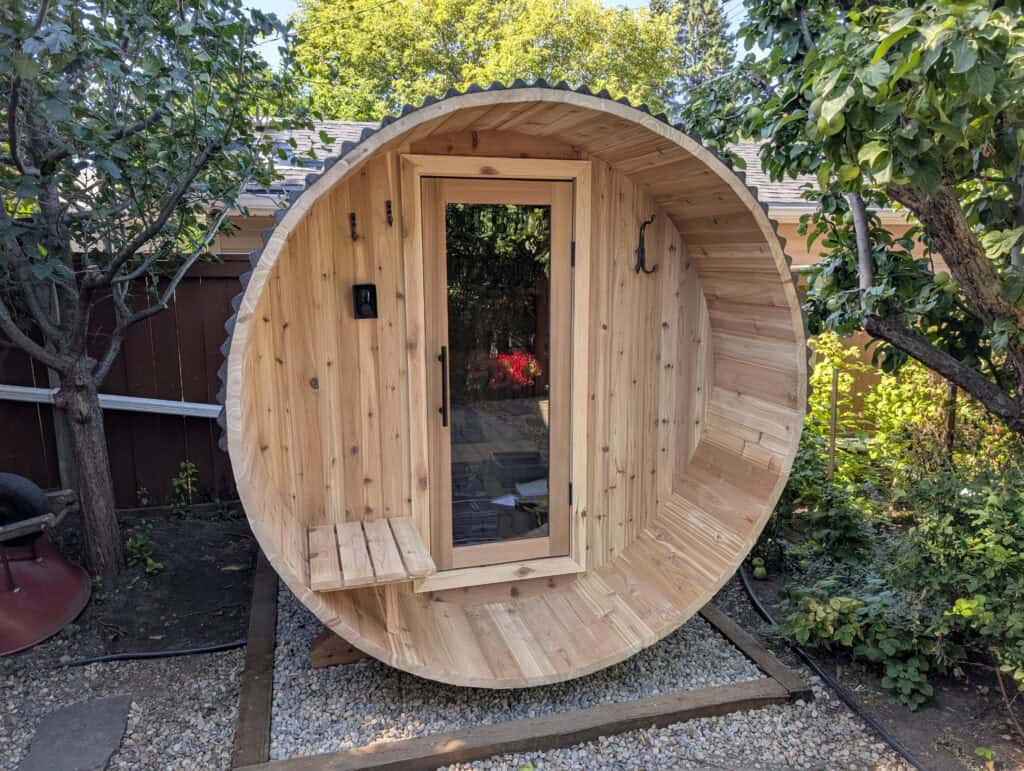
Some arrive almost completely assembled. Others are essentially a collection of timber, a heater, controls and electrical components that still need to be put together and connected.
One thing that catches people off guard is that even when the sauna company handles the assembly, they often leave the electrical installation to a licensed electrical contractor.
This can include running a dedicated circuit from the house, installing the heater supply, connecting the controls and thermostat, and ensuring the equipment is suitable for its location.
A Problem I’ve Encountered With Outdoor Sauna Kits
I was working on an outdoor sauna installation in Calgary when a City electrical inspector called me with a warning.
He mentioned that they were seeing a lot of sauna kits supplied with electrical equipment that wasn’t appropriately rated for where it was being installed. He specifically suggested checking the components before proceeding.
Sure enough, the sauna we were installing had been supplied with an indoor-rated controller, despite being intended for outdoor use.
We ended up installing the controller inside an outdoor-rated enclosure and running PVC conduit along the back of the sauna for the electrical connections, including the heater and thermostat.
That meant extra materials, additional labour and more work than someone buying a supposedly complete sauna kit might have anticipated.
An important point here is that putting a controller inside a weatherproof box doesn’t automatically make it suitable for every outdoor installation. The equipment’s certification, manufacturer’s installation instructions, temperature limits and environmental requirements still have to be satisfied.
My advice: Before ordering an outdoor sauna, ask the supplier whether every electrical component is approved for its intended installation location, and whether the quoted price includes all electrical connections.
Don’t assume an outdoor sauna automatically comes with outdoor-rated electrical equipment.
2. The Biggest Problem Is Usually Your Home’s Electrical Capacity
This is probably the most common complication I come across.
Many electric sauna heaters require substantial electrical capacity. Depending on the heater, we regularly see installations calling for dedicated 40A, 50A or even 60A circuits.
That’s a significant load to add to an existing house.
A lot of Calgary homes still have 100A electrical services. Depending on the existing loads, there may simply not be enough available capacity to add a large electric sauna without making changes.
But even having a 200A service doesn’t automatically solve the problem.
I’ve worked on homes with 200A services that already have a hot tub, multiple air conditioners, an EV charger and other significant electrical loads.
You can’t just look at the main breaker, see 200A and assume there’s another 50A available for a sauna.
Why We Perform an Electrical Load Calculation
Before installing a sauna, we need to determine whether the home’s electrical service can safely accommodate the additional load.
That means completing a load calculation using the applicable Canadian Electrical Code requirements, taking into account the home’s existing electrical equipment and the specifications of the proposed sauna heater.
It’s also important to distinguish the circuit breaker rating from the actual electrical demand. A sauna installed on a 60A circuit doesn’t necessarily draw 60A continuously.
The mistake I see is homeowners choosing a sauna based on its size, appearance and price without first checking whether their electrical system can power it.
Unfortunately, that decision can turn what looked like a relatively inexpensive backyard project into something substantially more expensive.
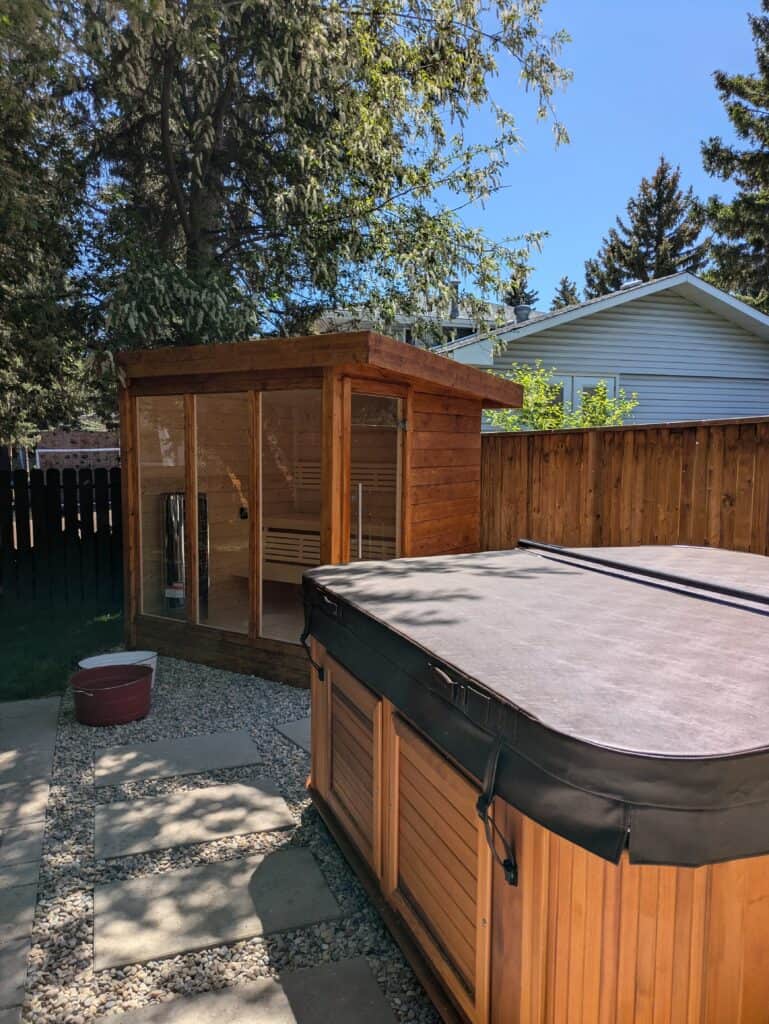
3. You Don’t Always Need to Upgrade to 200 Amps
If the load calculation shows that the house doesn’t have enough capacity for the sauna, there are generally two options worth evaluating: upgrading the electrical service or installing an appropriate energy management system.
Which one makes the most sense often comes down to how the house receives its electrical supply.
Overhead Electrical Services
For homes with an overhead electrical service, I generally favour upgrading to 200A where an upgrade is needed and feasible.
Overhead service upgrades are often more straightforward than underground upgrades, and the additional capacity can be useful beyond the sauna.
If you’re considering an EV charger, hot tub or other large electrical equipment in the future, upgrading the service may make more sense than repeatedly finding ways to manage limited capacity.
Of course, the final decision depends on the existing service, the utility’s requirements and the home’s actual electrical load.
Underground Electrical Services
Underground electrical services can be a different story.
Upgrading an underground service may involve new underground conductors, excavation, utility coordination and other complications. Depending on the property, that can become expensive.
For this reason, I often recommend looking at energy management before committing to a costly underground service upgrade.
An energy management system monitors the home’s electrical demand and temporarily disconnects a designated load when demand gets too high.
With the type of system we commonly use, power to the managed load can be interrupted for approximately 15 minutes before the system checks whether enough capacity is available to restore it. If demand remains too high, the load stays disconnected until the system’s reconnection conditions are satisfied.
For a sauna, that means the heater could temporarily lose power while other electrical equipment in the home is operating.
It’s not quite the same experience as having unrestricted electrical capacity, but it can be a practical compromise.
The system must be compatible with the sauna equipment and approved for the intended application. It isn’t a solution for every installation.
How Much Can Energy Management Save?
In some underground-service installations, choosing an energy management system rather than upgrading to 200A could save a homeowner around $5,000 in electrical installation costs.
That’s a significant difference, particularly when the sauna itself has already cost several thousand dollars.
The important thing is understanding both options before deciding.
A service upgrade provides additional electrical capacity, assuming the installation and utility supply permit it. Energy management works within the existing capacity by controlling when the sauna can draw power.
Neither is automatically the right answer for every home.
4. What Does Sauna Electrical Installation Cost in Calgary?
Here’s a general guide based on the type of work we carry out at Panel Upgrade Experts.
These are typical estimates rather than fixed quotations. The final price depends on the sauna specifications, distance from the electrical panel, access, wiring requirements and existing electrical service.
| Electrical work | Typical cost |
|---|---|
| Sauna electrical installation | $1,500–$2,500 |
| Energy management system | $1,500–$2,000 additional |
| 200A overhead service upgrade | $5,000–$6,500 additional |
| 200A underground service upgrade | $8,000+ additional |
What Does That Mean for the Total Electrical Cost?
For a home with sufficient existing electrical capacity, installing the electrical supply for a sauna might cost between $1,500 and $2,500.
If energy management is required, the combined cost could be approximately $3,000–$4,500.
If the homeowner needs an overhead 200A service upgrade, the combined electrical cost could be $6,500–$9,000.
For an underground service upgrade, the combined cost may start around $9,500 and could be considerably higher depending on the property.
These figures are for electrical work, not the purchase or assembly of the sauna itself.
And this is why I recommend checking electrical requirements before buying.
Imagine purchasing a $7,000 backyard sauna assuming you’ll spend another $2,000 to connect it, only to discover the house needs a service upgrade.
Suddenly, the electrical work could cost as much as the sauna.
It’s much better to discover that before the sauna arrives in your backyard.
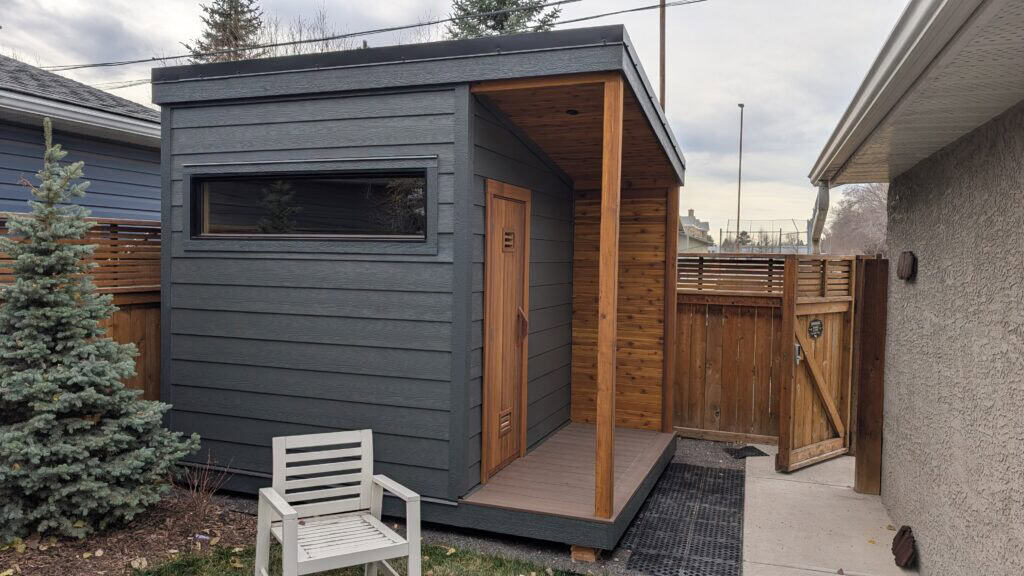
5. Why Two Identical Saunas Can Have Completely Different Installation Costs
This is something homeowners often overlook.
Two people in Calgary might buy exactly the same sauna, with the same heater and the same electrical requirements, but end up paying very different amounts for the electrical installation.
One homeowner might have a 200A service with sufficient available capacity, an electrical panel close to the sauna and a straightforward route for the wiring.
Another might have a heavily loaded 100A underground service, a finished basement between the panel and the backyard, and a sauna located a considerable distance from the house.
The first installation might only need a new dedicated circuit.
The second could require energy management, longer cable runs, additional conduit and considerably more labour.
The price of the sauna tells you very little about what it will cost to connect it.
The home’s electrical system and the physical installation conditions are just as important as the equipment you’re buying.
6. What I’d Check Before Buying an Electric Sauna
If I were buying a sauna for my own home, or advising someone before they placed an order, these are the things I’d want established first.
The heater’s electrical specifications. Find out the heater’s actual rated power, voltage, required circuit and any separate electrical requirements for controls or other equipment. Don’t rely on the sauna’s physical dimensions to estimate its electrical demand.
Available electrical capacity. Have an electrician assess the existing electrical service. A spare breaker space doesn’t necessarily mean there’s enough capacity for another substantial load.
Where the sauna will be installed. An outdoor sauna introduces considerations that may not apply to an indoor installation, particularly around environmental ratings, wiring methods and equipment placement.
What’s included in the kit. Ask whether the heater, controls, sensors, wiring and other electrical components are included. More importantly, establish which parts the supplier installs and what remains for the electrical contractor.
The installation route. Where is the electrical panel? How far away is the sauna? Will wiring need to pass through finished areas, run underground or be installed along the exterior of the house?
Whether permits are required. Sauna electrical installations in Calgary need to be assessed under the applicable electrical permitting and inspection requirements. For contractor-performed electrical installations, the electrical contractor is responsible for obtaining the necessary electrical permit.
None of these questions are particularly complicated to answer once the sauna model and installation location are known.
But getting the answers before buying can prevent some expensive surprises.
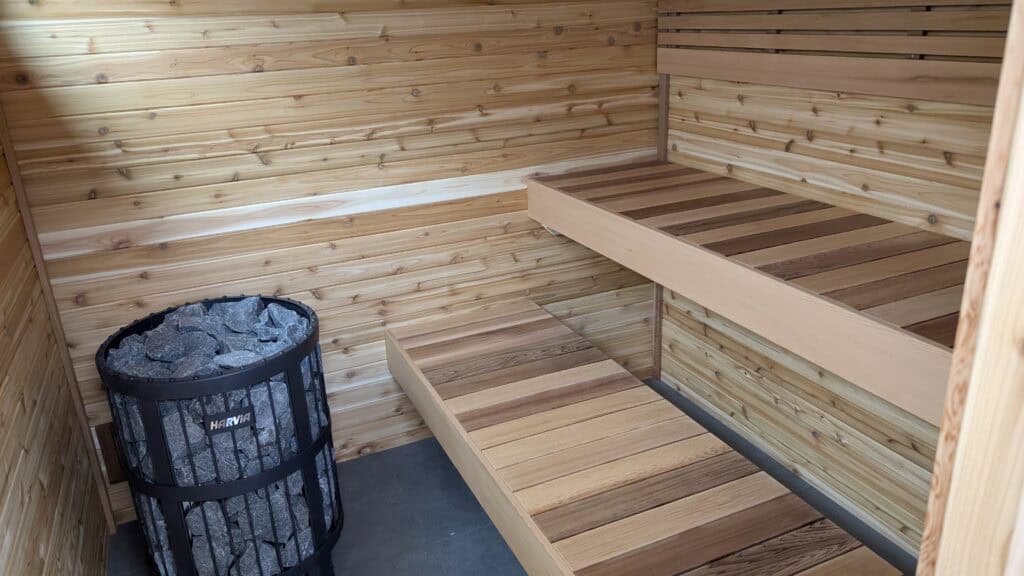
7. Get the Electrical Side Figured Out Before Ordering the Sauna
I’m a fan of saunas. I’ve built my own, and I’ve worked on enough installations to appreciate just how different they can be.
From a basic kit to a fully custom backyard sauna, there’s a huge range of products available.
What doesn’t always change is the need to make sure the home’s electrical system can safely support the equipment.
Sometimes that’s straightforward. Sometimes it means adding energy management or upgrading the electrical service. And occasionally, it means discovering that components supplied with the sauna aren’t suitable for the planned installation.
None of these problems are necessarily deal-breakers.
They’re simply much easier to address before the sauna is purchased and delivered.
At Panel Upgrade Experts, we handle sauna electrical installations, electrical load assessments, energy management systems and service upgrades throughout Calgary.
If you’re planning a sauna, we can assess the electrical requirements, explain your options and give you a realistic idea of the installation costs before you commit to the purchase.
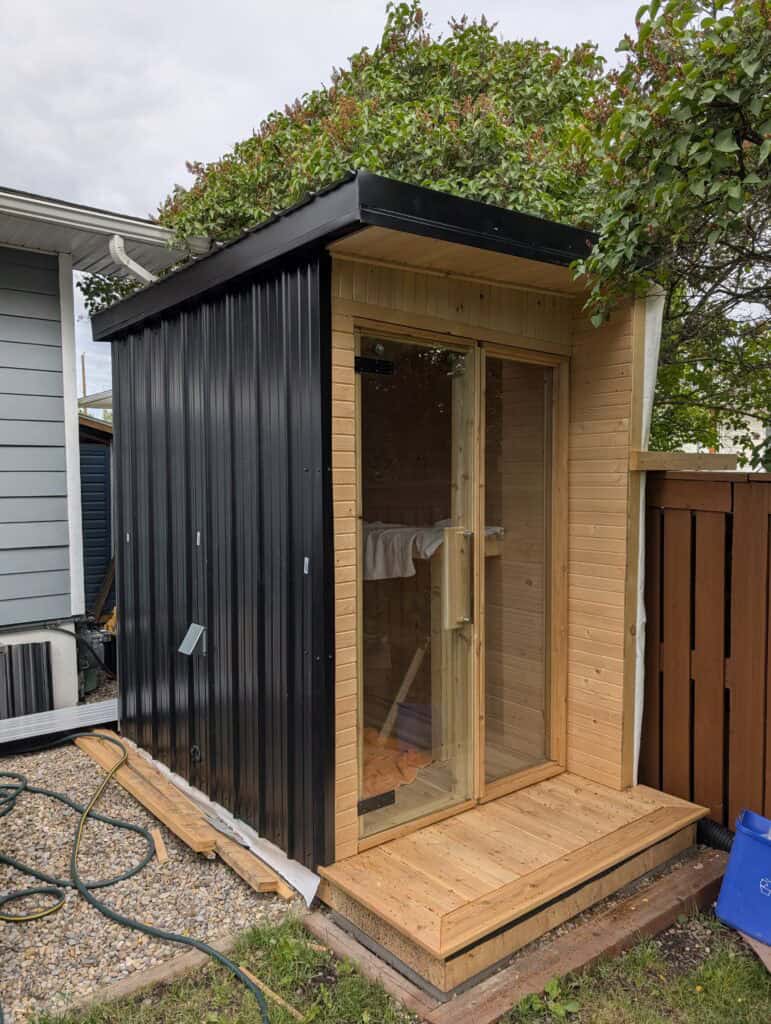

Paul Hannania is the founder and owner of Panel Upgrade Experts, a Calgary residential electrical company established in 2013. A second generation electrician with over 25 years of hands-on experience, Paul trained under his father in England before earning his Red Seal certification in Canada. He has completed over 1,000 electrical panel upgrades for Calgary homeowners, competed in the Ideal National Championship two consecutive years, and represented Canada as an international competitor in 2019. Panel Upgrade Experts operates under Master Electrician oversight on every installation with no subcontractors. Learn more about Paul and the team.